
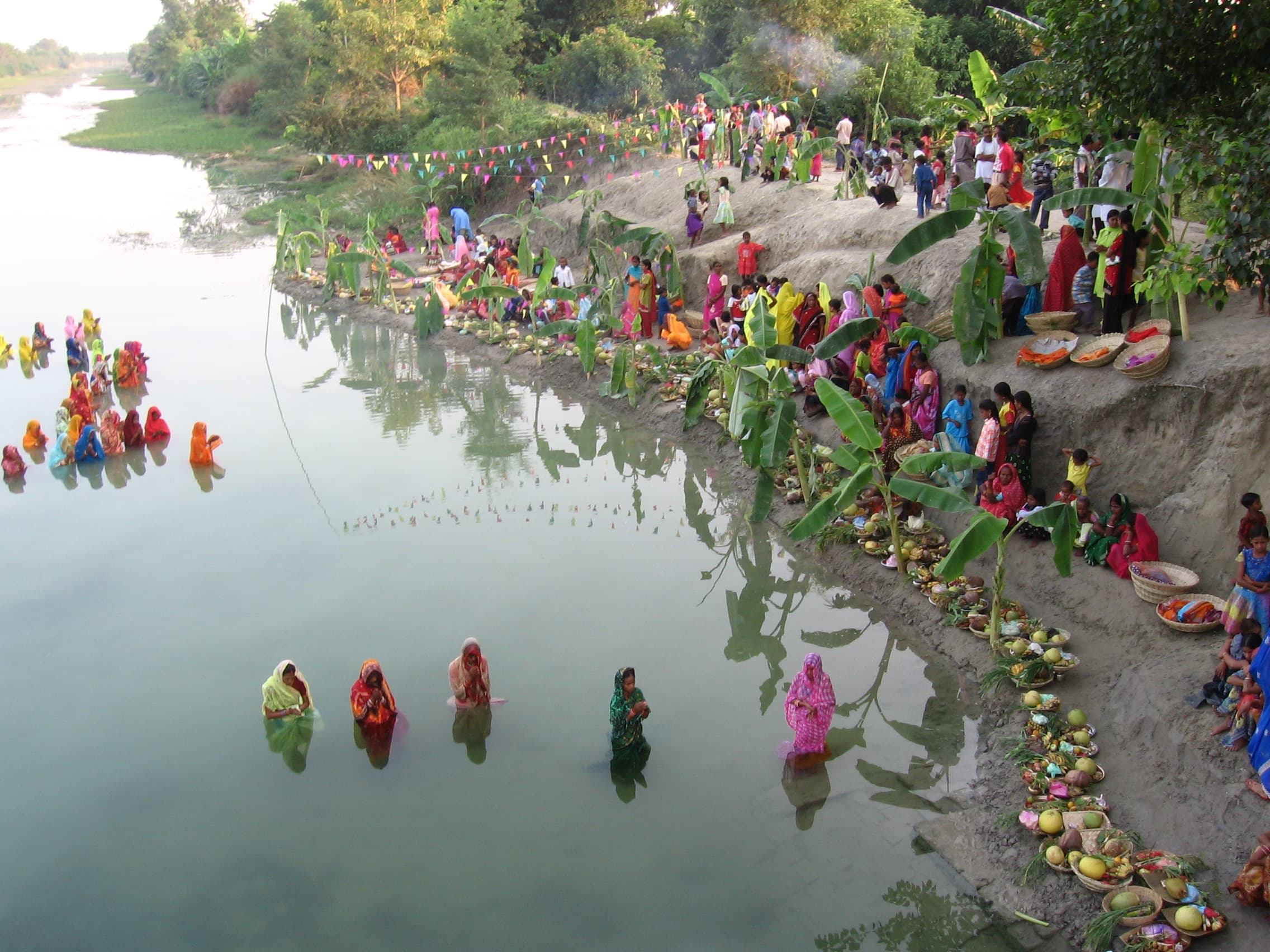
Chhath Puja is a Hindu festival of devotion to Surya, the sun deity, observed especially in Bihar and eastern Uttar Pradesh and by communities far beyond those regions. It unfolds over four days through preparation, fasting, prayer, offerings at water, and the sharing of prasad. The festival is distinctive for arghya offered to both the setting and the rising sun. Thekua is among its most recognised food offerings—but its meaning in Chhath comes from the devotional context, not simply from its recipe.
Understanding the festival
What is Chhath Puja?
Chhath Puja is an observance dedicated to Surya. Government of India tourism sources describe it as a four-day journey of prayer, fasting, purification and offerings. It is widely associated with Bihar and eastern Uttar Pradesh, though migration has carried the observance to cities and communities throughout India and abroad. A family may continue its practices beside a river, at a public ghat, near a pond, or at another carefully prepared water setting.
The festival is often described through its most visible scenes: devotees standing in water, bamboo baskets filled with offerings, sugarcane, fruit, lamps, songs, and large gatherings at dawn or dusk. Those scenes are meaningful, but Chhath is not only a public spectacle. Much of its significance lies in the discipline of the vrat, the work of preparing a clean household and cooking space, the participation of relatives, and the quiet intention behind each offering.
Practices are not identical in every family. Names, songs, recipes, the distribution of tasks and local arrangements can vary. A respectful guide can describe the broad structure supported by reliable sources, but it should not present one household's method as a universal religious rule. Families and community elders remain important guides to their own observance.
Why it matters
Devotion, discipline and gratitude
Chhath is important to devotees because it brings worship, self-discipline and gratitude into a sustained four-day practice. Official tourism descriptions connect the observance with prayers for well-being, prosperity and longevity. Those hopes are expressed through fasting, careful preparation, sacred bathing or standing in water, arghya, and the offering and sharing of prasad.
The focus on the sun also places the natural world directly within the ritual experience. Daylight, water and the movement from sunset to sunrise are not decorative elements added around the prayer; they shape when and where the principal offerings take place. The festival asks participants to be present at two transitions that occur every day but are easy to overlook: the sun descending below the horizon and returning with morning light.
For many families, the importance is also social. Preparing the ghat, carrying baskets, arranging offerings, making food, welcoming relatives and sharing prasad require cooperation. People who are not observing the fast may support those who are. Neighbours and community groups often contribute to cleaning and organising shared spaces. The result is an observance rooted in individual devotion but sustained through collective care.
Chhath honours both the setting and rising sun—holding gratitude, endurance and renewal within one continuous observance.
The four-day journey
How Chhath Puja unfolds
The four days are commonly described as Nahay Khay, Kharna or Lohanda, Sandhya Arghya, and Usha Arghya. The outline below is an introduction based on Ministry of Tourism descriptions, not a replacement for family or religious guidance.
Nahay Khay
The opening day centres on cleansing, preparation and a carefully prepared meal. Homes and cooking spaces are readied for the observance.
Kharna or Lohanda
A day of fasting and worship that concludes with prasad. Official tourism accounts mention preparations such as kheer and fruit being shared.
Sandhya Arghya
Families gather at a riverbank, pond or other water body to offer arghya to the setting sun. Baskets of prasad and seasonal produce accompany the gathering.
Usha Arghya
Before or around sunrise, devotees return for arghya to the rising sun. The fast concludes and prasad is shared with family and community.
The sequence matters. Preparation comes before the public offerings; sunset is followed by sunrise; fasting is followed by completion and sharing. Thinking of Chhath only as one evening beside the water misses the continuity that connects the four days. Each phase prepares for the next, while the household, the cooking, the journey to the water and the return home remain part of a single devotional arc.
Sunset and sunrise
Why are both moments honoured?
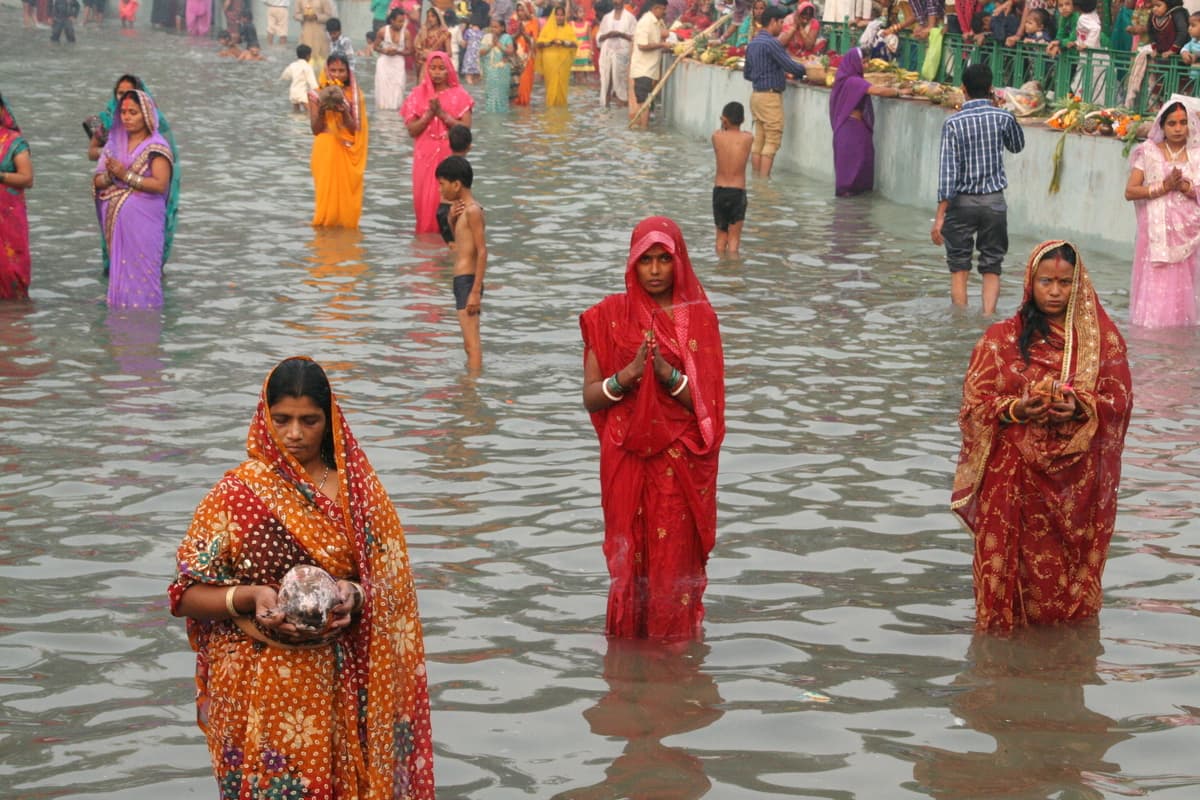
Incredible India highlights Chhath as an occasion in which worship is offered to both the setting and rising sun. Sandhya Arghya takes place as daylight recedes, while Usha Arghya follows when the sun returns. Together, the two moments give the observance its recognisable rhythm across evening and morning.
People explain the meaning of these offerings through faith, family teaching and regional tradition. A public food website should not flatten those interpretations into one definitive slogan. What can be said responsibly is that the sequence expresses reverence at both ends of the daily cycle. It creates a pause at sunset and another at sunrise, linking completion with renewal rather than celebrating only the brightness of midday.
The water setting deepens the visual and physical experience. Reflections, changing light, baskets arranged along the bank and groups standing together create some of Chhath's most recognisable imagery. Visitors and photographers should remember that these are active spaces of worship. Images should be made and shared with sensitivity, without obstructing devotees or treating private prayer as a staged performance.
The offering at the heart of the story
Why is Thekua important in Chhath Puja?
The Ministry of Tourism's Utsav Portal lists Thekua among the prasad offered during Chhath Puja, alongside preparations such as kheer, kasar and seasonal fruits. In this setting, Thekua is not merely a snack placed in a basket. It is food prepared with attention for a devotional offering and later shared with family and community.
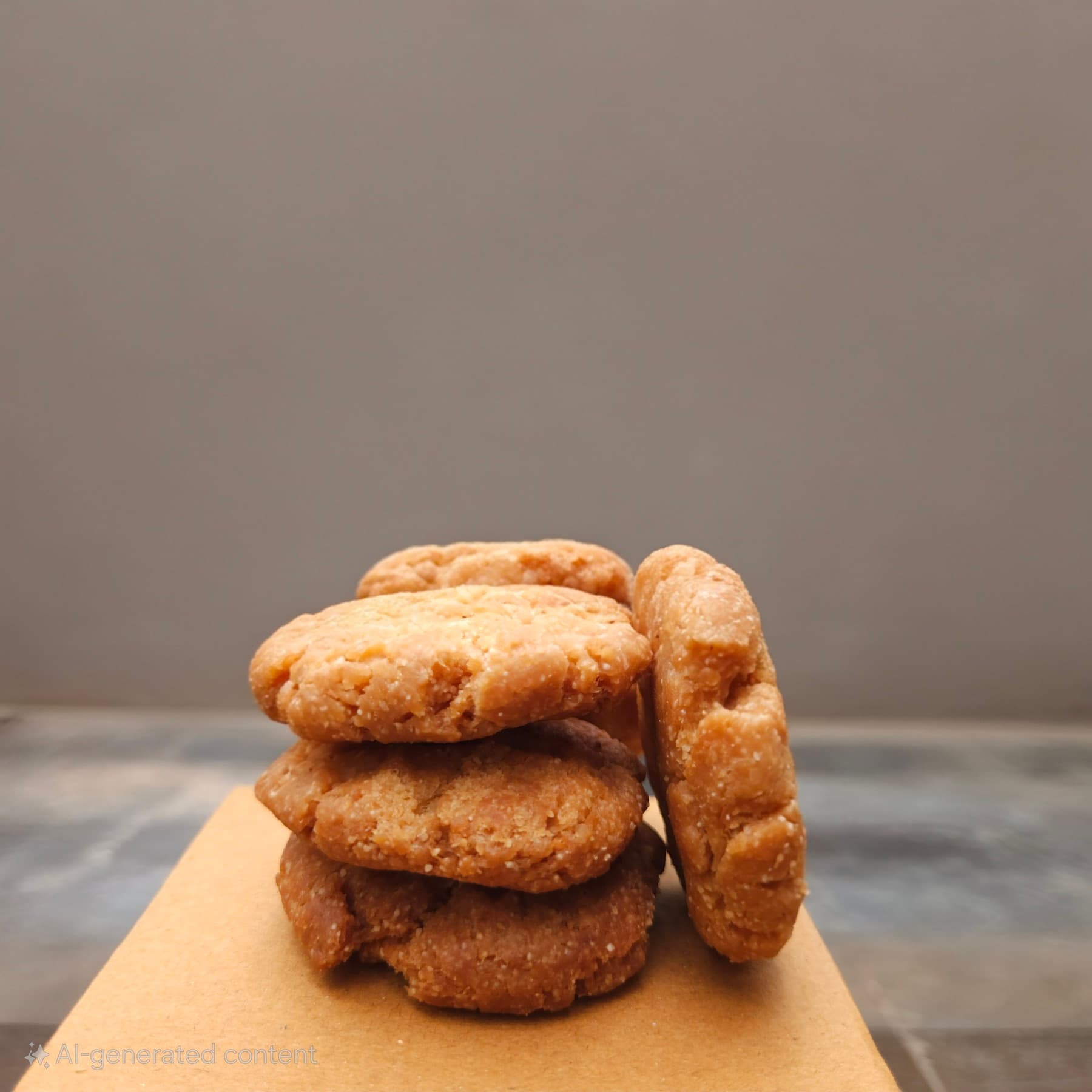
Common Thekua recipes bring wheat flour and jaggery together, but family versions differ. Some households add ingredients or use shaping methods passed down through generations. Bihar Tourism describes the use of a wooden mould called a saancha to create a patterned surface. The mould, thickness, sweetness and texture can change from one kitchen to another. This variety does not weaken the tradition; it shows how a shared food can be carried through distinct family practices.
The act of making Thekua can also distribute work across a household. Ingredients are assembled, dough is prepared, pieces are shaped and cooked, and cooled offerings are arranged for the journey to the ghat. The food becomes connected to time, cooperation and intention. Once offered as prasad, it is shared—extending the observance beyond the person who kept the fast.
An essential distinction
Retail Thekua and prasad are not the same claim
Prasad describes food within a devotional offering context. A commercial packet of Thekua is therefore not automatically blessed, consecrated or equivalent to food a family has prepared and offered during Chhath. The recipe name alone cannot create that religious status.
PARV FOODS' product is a retail food inspired by Bihar's food traditions. Its product page should be read for ingredients, allergens, nutrition, best-before information and business details. Cultural articles such as this one explain the wider tradition; they do not certify ritual suitability. Customers who wish to include any purchased food in their observance should follow their own family and religious guidance.
This distinction is not a disclaimer added at the edge of the story. It is part of telling the story honestly. Chhath deserves language that recognises devotion rather than turning it into a sales device, and customers deserve product information that can be checked independently of cultural emotion.
Home across distance
How the tradition travels
As people from Bihar and neighbouring regions have moved, Chhath observances have become visible in many cities and countries. Families adapt to different landscapes while preserving the broad rhythm of preparation, evening arghya, morning arghya and sharing. A temporary water space or an urban ghat may look different from a village riverbank, yet the intent can remain deeply familiar to participants.
Foods such as Thekua travel with these communities because recipes can be taught, remembered and shared. For many people, its aroma or patterned shape can evoke a parent or grandparent's kitchen, a journey home, or the work of preparing for Chhath. These memories are personal rather than universal. Someone encountering Thekua for the first time may appreciate it through curiosity, while someone else recognises a family history in a single piece.
That combination—shared tradition and individual memory—is one reason Thekua can hold such importance. It is tangible enough to prepare and pass from hand to hand, yet open enough for each household to carry its own method and meaning.
Research and image record
Sources and further reading
This article separates source-backed cultural facts, inclusive brand storytelling and PARV FOODS product information. Religious practices may vary, and this guide is not religious instruction.